Saturday, 2 May 2020

Interview with Ade Adepitan

Born in Lagos Nigeria Adedoyin (Ade) Adepitan. Contracted Poliomyelitis (polio) at the age of just fifteen months. As a result of this Ade was left with only partial use of his right leg and none at all within his left. His parents decided to move the family to Plaistow in east London, allowing for access to better medical treatment and the chance for Ade to be taught how to walk using iron callipers. (an Iron walking frame) 
which he then continued to wear up until the age of 17.  
Ade had a real passion for football, spending many of his young years dreaming of playing football for England.


As Ade grew up he gained many friends many of whom helped him get around by pushing him in a supermarket shopping trolley. It was on one of these many outings that he was spotted by two local Physiotherapists, Wen McGhee and Kay  Owen. Who both worked teaching young disabled children in the east London catchment area how to use sport as a way to become more independent despite their challenges. 

Becoming intrigued Ade then travelled to Stoke Mandeville in Buckinghamshire, where he was introduced to wheelchair basketball. This was the day Ade's life was changed forever as from that moment, his biggest ambition was to train so hard he gained a spot on the Great British Paralympic wheelchair basketball team. Then to go on to win a medal in the Paralympics for Great Britain


Being selected to represent Great Britain in the Paralympics of 2000 held in Sydney. His teenage dream began to come true. 
These games were very significant for all those involved as the brilliant media coverage enabled them to gain public support. 
opening up new television opportunities.  Shortly after the games he was featured in Playstations double life advert, starred in a documentary titled "Hoop dreams" for cable channel and also presented a national T.V wildlife show. 


This gave Ade even more perseverance enabling him to go on to win a medal in 2002 whilst competing in both the Paralympics and  European championships .
 picking up both a Bronze and Silver medal. 
His career went from strength to strength as he then in 2004 where he also won a medal. 
In 2005 where he again picked up both a Bronze and silver whilst again competing in the 2005 Paralympics and European championships


Nowadays most of Ade's time is taken up by television work, mainly presenting wildlife documentaries where his determination is really on show, no matter how tricky the terrain he will try to cross it. 
It was one of these shows,  I was introduced to Ade and his work. I have no idea why but this was a time I really needed some motivation, something or someone to actually prove to me that even with my struggles I could still achieve all I wanted to. 

I'm feeling much like that at the moment, something I spoke about in my last blog but seems to still be trying to come back from.
Ade has also written and released a series of children's books titled "The Cyborg cat" , based in part on his life growing up with a disability. 


Upon asking  him what he hopes to achieve with this series he told me he would "like all kids to see that it’s ok to be different to realise the importance of a good, genuine friendship but to realise that all of us can be superheroes if we believe in ourselves." He also believes that the younger generation of around  30 and below have a much more positive perception of disability than when he was growing up. However, he accepts older generations can still sometimes struggle with prejudices they grew up around. 


And says "we need to be more empathetic as a nation." Being in the act of  "Looking outwards as well as inwards" whilst we "care for ourselves and be proud as a nation." Ade considers this to be very important and expresses the obligation to "try to understand and help people who are less fortunate" 
Connecting on from this Ade disclosed his feelings on the Corona Virus pandemic talking of the desperate need of cooperation in these challenging times he told me "The Coronavirus pandemic has shown that whether we like it or not our world is interconnected and we are interdependent on each other. 

"When China has cold the whole world sneezes!! If Africa nations keep struggling economically then at some point we will all pay the price. That could be through the spread of viruses like polio or Corona." And that "poverty in African nations leaves their younger generations vulnerable to being indoctrinated into negative philosophies. Or when " you feel like the world has left you behind and nobody cares then you become easy pickings for recruitment into terrorist organisations." Ade confesses that "If we are to survive as a race we cannot afford to leave anyone behind." 


One of my ten questions to Ade was advice about getting into sports or entertainment. Like a lot of celebrities have said in the past he agreed you have to make sure it’s for the right reasons and "because you have a passion for your sport or whatever area of entertainment you’re trying to get into." Suggesting that " If you’re in it just for the fame and money then you’ll struggle to find true happiness" 
I'm sure the majority of you will be aware of the "We are Undefeatable" campaign that did the internet and social media circles last August. 
I myself feel there's a lot more that could be done to make sport more accessible, especially for children. 


Disability sport is rarely shown on television so it was nice to see Ade's views on this, he also feels that "the only way to make disability sport more accessible is by increasing visibility. " as well as allowing it to be shown on "mainstream media all the time just like mainstream sports." 
Having been impacted by sport himself he knows what a powerful tool it can be and saying it is " a very powerful tool for life if it’s taught in the right way." Ade also states that he wouldn’t be where he is today or have achieved many of the things he has achieved if it wasn’t for the lessons he learnt from playing sport.


As I'm coming to the end of my blog I feel it is time to talk about achievements,
Ade was part of the bid team that went to Singapore in 2005, helping London win the rights to hold the Paralympic and Olympic Games. Which he described it as a "historic and game-changing moment that I will never forget." 
Ade's advice to anyone struggling with a disability is to "Never give up"


I hope you enjoyed reading this weeks blog. This is the most excited I have been about a blog and I'm so  happy with the way it has turned out. I also wanted more of a challenge so I decided to put the questions at the end but included them within the text. Something in which I never do. So I really hope it has worked and makes sense. 
Thank you so much for reading ❤


Sunday, 19 April 2020

Disability awareness

This is something I've been wanting to write for about a week. But I've been so upset and had no idea where to start. 

I said on Instagram a few days ago that it is really important for me to document these things meaning everything that happens to me as a result of a disability. Especially the ones people don't see or value as being important. 

Since the start of corona I've seen so many ableist posts for so many people from different walks of life, I spend 90% of my time at home most of which is spent asleep or resting. People have been saying that you have no purpose at home or that you can't achieve anything from the comfort of your own home. 

As a person with disabilities and one who can't get out hardly at all it has really got to me. I work so hard at many things including staying happy and as well as possible.

 Something that probably seems obvious but the more I think about it maybe it's not. I have to put so much more effort into doing anything than an average person does. 

I always tell myself that at the end of the day, I've put more effort in so it means more than what others do. I pride myself on that mindset a lot when I get down in the dumps. 

The media has much to play in people's perceptions of the disabled community (some of my best friends) many people think we are worth less than others. Simply because our reality is, without stopping to think about what lifeit is like for us. 

I've spent the past 7 or 8 years trying to survive in my reality of self-isolation. I've spent about 4 or 5 of those years rebuilding my life. Teaching myself how to read and write again. Something you never expect to have to do. I succeeded but as a result became more aware of what it is like to live with severe disabilities where that is your whole life, forever and always. If at all ever possible I would love for the opportunity to give that back to others who need it. To re-teach them or at least allow them access to literature in one way or another. 


These comments made me question if everything I'm proud of is just completely pointless because it's not what others are achieving. I'm not even on the scale of small accomplishments if you put it that way.

 I don't know who will read this but whoever you are I bet you know me well enough to know my lack of education is my biggest insecurity. It sounds bizarre yet it's something that always gets me down. Especially on exam results day or anything of the sort. I'm extremely sensitive about it. 
I also massively struggle with self-confidence, another thing I'm pretty sure is partly related to schools and also in part how again no one seems to see how hard I work at everything I try to do. 

Thinking about all the stuff I failed or haven't achieved and all the stuff I want to do but can't. 

I've told a handful of disabled friends about this who have told me I have every right to be upset and that this is extremely ableist. One disabled activist even replied to my comment on her post (the post was about similar things) saying that it was ableism at its highest. 

I have massive respect for these people, as it is something I'm trying to do myself, considering what I have seen lately it makes me think in failing in this. My main reason for writing this blog about my own experiences as well as others is to include other disabilities that I have no or little knowledge of. That way I learn as well as whoever reads it. 

What she said gave me so much reassurance that I wasn't being overdramatic. 

Whenever I see people who I went to school with posting about achievements online I always think to myself things like I knew you were going to be successful because everyone liked you ect… but I wasn't purely for the fact I was a sick child. That's not exactly true, well it is partly these people have mostly had a better chance than me to be able to achieve things. 

I've slept instead. 

I've been trying to work out what I have done that has really been able to make a difference. I've done a lot of charity work for disabled young people which is what I feel my life is all about. I feel my purpose is to somehow help sick people. I've done all my Swan Princess edits, blogs and lyric videos which despite what anyone else thinks means so much to them. 

As well as me because It's given something to do and lifelong friends who are some the nicest people I have ever known. I've also done various edits for other film companies and things. Something that of able to at some point would love to take further. 

I'm so proud that I can now both read and write again, also blog even if I am just venting and no one is listening. 

I know I shouldn't care what other people think of me or their perceptions of my life or the way I live it. But the thing is I'd say at least 95% of my friends have some form of disability, so I feel hurt for them as well as me. 

Things like this are seen so much in the media, who play so much with people's perceptions of disability and chronic conditions. For some reason, people believe them. There are so many disability activists who do incredible things, I've spoken to so many young disabled actors who have so much to say on the matter. It's truly inspiring. 

Ones who are already doing incredible things for the likes of us and ones who I know will continue to do so. 

No one should have the right to say me and my friends are worth less than anyone else. 

Education is seriously needed on the matter, language education. I know CBBC does an incredible job at showcasing disabled talent, but education needs to be spread across the board. Ask questions, ask how things should be worded and please please think before using ableist language. I'm absolutely exhausted. But I wanted to try and promote disability education. For me and everyone who right now is feeling the same for similar reasons. To all my disabled friends I'm so sorry but just know that I'm here for you and I love you. Also, I think you're brilliant 🌟 


Update from today: I did a mass tweet along with a few Instagram DMS of people of whom to write blogs about last night. An M.E charity has already responded so I'm in the middle of figuring out questions to send them Anne Haggerty also replied to my tweet with a yes so I've contacted her agent to make sure I've got the right address and to check the questions will go to the right place. 

My main especially now is to keep spreading disability awareness, inclusion and hope. I just really hope at least one person is listening ❤


Tuesday, 7 April 2020

Mini book reviews

I started this blog Over the course of last summer, after having caught the mumps meaning I was more ill than normal, which is really saying something for me. But one positive to have come out that was that I had the chance to listen to some amazing audiobooks.  

I'm really grateful for audiobooks because they give me access to completely different times, places & people. When you are stuck in bed unable to do anything it's an incredible way to escape it all. 

I then got thinking about some of the other books I have enjoyed.  I've compiled a list of some favourites. It's a very varied bunch of stories mostly children's but I hope this helps at least one person find a book recommendation that occupies your mind whilst we are all on lockdown. 


1: Becoming: Michelle Obama 

This was a book on my TBR (to be read) list for such a long time, I never thought I would get around to reading or listening to it. Eventually, I did. Having not really known much about the Obama's it was a real insight for me. 

I find it really inspiring to hear/read real-life stories from truly remarkable people. I don't think you can never really value how hard a person has worked unless you know their struggle to get to where they are. This book not only talks about Michelle's life in the white house, where she faced a variety of challenges, raising a growing family whilst trying to hold down a job but also of her childhood struggles with poverty & racism. 


2:The Witch's Daughter: Paula Brackston 

I don't know where to begin with this book, it was what I would class a masterpiece, set in a world of witches and time travel. It cleverly manages to switch from present-day then to flashbacks of the past without making the book extremely hard to follow. All historical snapshots are written so perfectly you feel as if you have actually stepped back in time & watching the events unfold from around you. 
For a book like this to work, you need someone for the story to be told to otherwise it would make no sense. Having Tegan allowed this. Tegan a shy & lonely girl but all the lessons from Elizabeth give her something to focus on, making her believe in herself. They also give her the confidence to help Elizebeth fight off the man who has been torturing her since the 16th century who just so happens to be Tegan's boyfriend. 


3:Pages&Co: Tilly & the book wanderers ~ Anna James

Every bookworm feels as if they have lived in the world of their favourite characters, cried with them, laughed with them & just generally been a part of their lives. This book is based on that concept but it makes it so much further, at the start of the book Tilly has little friends so like many lonely people she turns to books for comfort only she discovers that she can have real-life adventures in them. 
I adored how real this book felt, I felt as if I was Tilly I and that all these beloved characters were with me whilst I went about my day. 

I also admired the addition of Oscar,
giving his character dyslexia but making him love books is a really great idea as it shows that anyone can have a passion for reading no matter who they are & that stories are always with us no matter how we choose to access them. 

The best part of this book was finding new stories I had never heard before then being able to listen to them, go back & understand the story on a whole new level. I think it's important for old loved classics to be brought back into circulation so a whole new generation of children is able to love them as much as the last. 


4:Pages & co: Tilly & the lost fairy tales ~ 


I loved this book just as much as the first the way it links to the first book yet still has its own storyline with new & complicated characters. I think I said this about the first book but Anna James seems to have the ability to make you feel apart of Tilly's world like you are there experiencing everything with her. I personally love fairytales & read or listen to them to escape reality. This book is a fantastic mix of realism & fairytale, It's important to tell new stories & in the process figure out how to create new & updated versions whilst preserving the old ones & keeping them alive. This book does that brilliantly. 


5:The Wombals: Elisabeth Beresford 

I feel most people have probably read this book, but if not please take the time out to do so. Read it to your children or grandchildren or just to yourself. I love children's stories. Especially for helping calm me down or helping me drift off to sleep.  I found the sweetness & innocence of this so refreshing. Sometimes you need that sort of thing to make you feel better. I think everyone could learn from that and I also believe that we need to bring the wombals back into circulation. They were way ahead of their time with their recycling efforts which is something we desperately need in today's society. 


6:Opal Plumstead: Jacqueline Wilson  

I was unsure whether or not to listen to this book but upon finding it in an audible sale I thought I would give it a go. My reason for being unsure was that I knew it slightly touched upon the first world war. The whole idea of war terrifies me but this only briefly touches upon the fighting aspects of war it's mostly about Opal's life working in a sweet factory after having to leave school when her father ends up going to prison. 

Opal manages to befriend her factory boss who takes her under her wing offering her a new position within the factory, she also introduces Opal to the suffragettes who she then attends meetings with. Opal then goes on to thrive in her workplace, she also begins to feel like she has a purpose. Falling in love with Mrs Robert's (her boss) son Morgan. Miss Robert's does not approve of their relationship but despite this, they do get to spend some precious time together before the war brutally rips them apart. 

I sometimes struggle with being able to relate with modern characters mostly because my life is so different from theirs. I find fantasy stories more relatable than most fiction stories. Although I could relate to Opal in various ways I also found the historical elements really interesting. And although it moved me so much that I was brought to tears it gave me much to think about. 


7: Wave me goodbye: Jacqueline Wilson  

Another Historical war book, written by Jacqueline Wilson, which again I was apprehensive about but it's mostly about Shirley's time in the country. It does mention the actual war but does not go into detail about an actual fight. Most of the story is about Shirley's newfound friends and the people she ends up living with. 

All the characters in this book feel very real & there also a good mix of characters from really rich to really poor who all have very different characteristics but are somehow able to come together despite their differences. 


8: The Railway Children: E.Nesbit 

The simplicity of This book was lovely, I went through a stage of trying to read or listen to more classics that I missed as a child. I found this on BBC Sounds & decided to give it a go. 

I sometimes find that some children's books are that because they are easy to follow they can be slightly dull. This book was highly enjoyable. It was also useful to me to have it split up into different adventures because this helped me keep up with it when I was at my most tired. 


9: The Lost Magician: Piers Today 

Being set just after the war, this book again has a historical element. Very much like pages&co, it allows you to step into fairy tales, doing an incredible job at mixing reality with fiction. The war in Britain has just come to an end but the fairyland war is only just beginning. Children have to muster up all their thoughts, emotions and fears of the real war to help save
the world's beloved stories. 


10: Cyborg Cat and the Night Spider By Ade Adepitan 


I found this on the audible website, they have compiled a list of free books to help children with boredom during the lockdown. Audiobooks are super expensive when you can't find bargains or offers. (something I love to do) But I can go weeks using borrow box without having to actually purchase a thing. When it came to finding a new book I was stuck until I discovered audibles free options. (I already have audible that me & my dad share, but wanted to save the credit) 

Having wanted to read or listen to this for over a year I knew I had to give it a go. Forming a realistic-sounding story but making it interesting was one of the many things I acknowledged when listening to this book. 

I cry so easily at sometimes the stupidest things, of course, I cried especially at the bits I could relate to. I think it also makes it more emotional that Ade was ultimately writing about himself and his own experiences. In places very similar to mine, I also cried at how sweet his friends were. I only have 4 proper friends who meet up with me and whom I would completely trust if anything bad were to happen. But these friends have known me since very young, they've grown up with me and have been with me through everything. Very much like Ade's friends in this book. 

I wouldn't just recommend this to children  I think everyone should read it at some point in their lives, especially if you are or know someone with a disability. 


Thank you for reading

Saturday, 4 April 2020

Erin's Wish


For anyone who may not know Epilepsy is a neurological condition that causes seizures or unusual sensations and behaviours. There are more than 20,000 cases of Epilepsy diagnosed in the U.K each year. With family history may increase your chances of developing the condition,  Medications and treatments are available to ease symptoms but as of yet, there is no known cure. 


Symptoms of Epilepsy can be lifelong or you may only experience them for a number of years.  If a seizure lasts more than thirty minutes you will be required to seek immediate medical attention. Sometimes this can be fatal, as was in Erin’s Taylor's case. 


Who sadly passed away from SUDEP (Sudden unexpected death in epilepsy), a destructive complication of epilepsy. On  the 5th of March 2018 at just nineteen years old. SUEP occurs approximately in 1 of 4,500 epilepsy patients. 


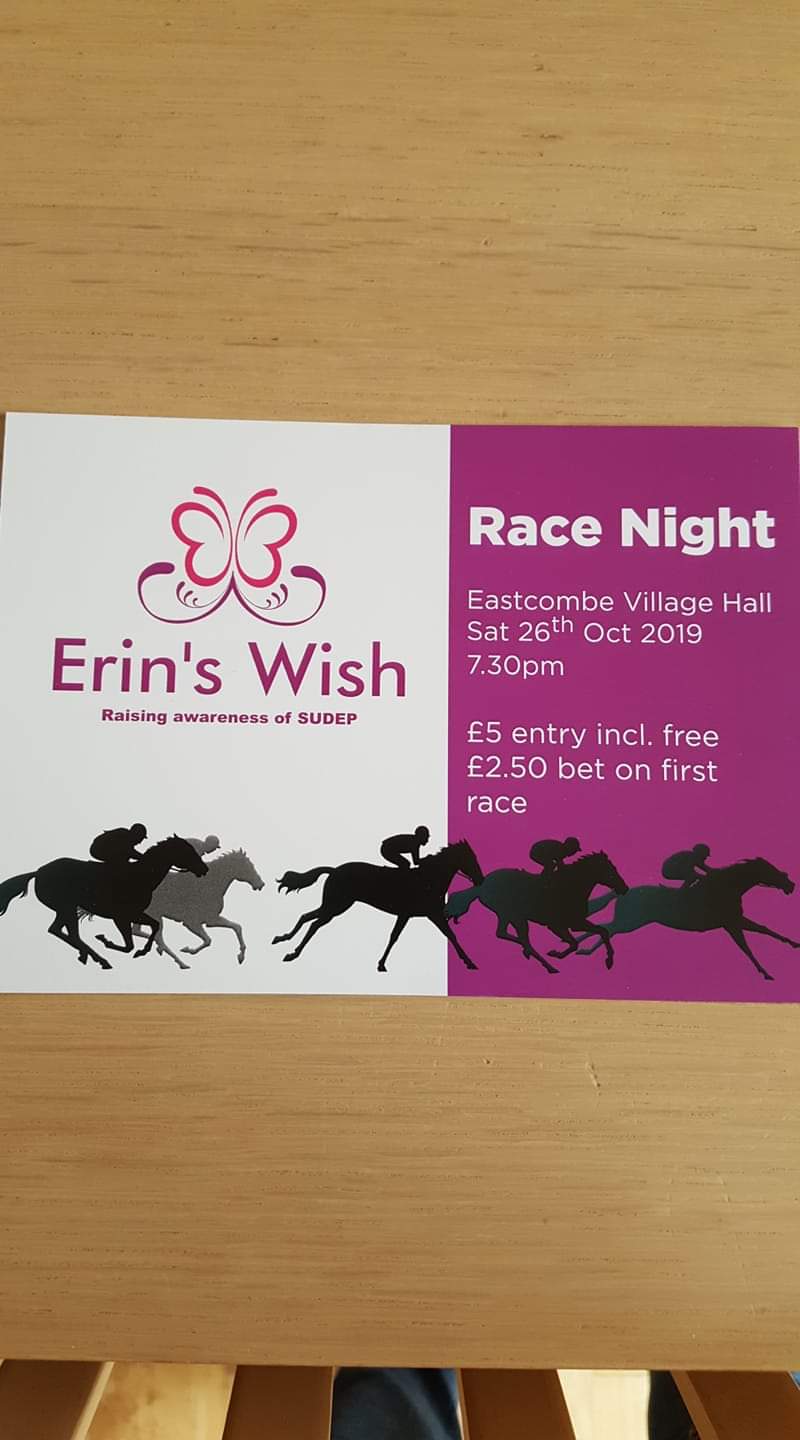
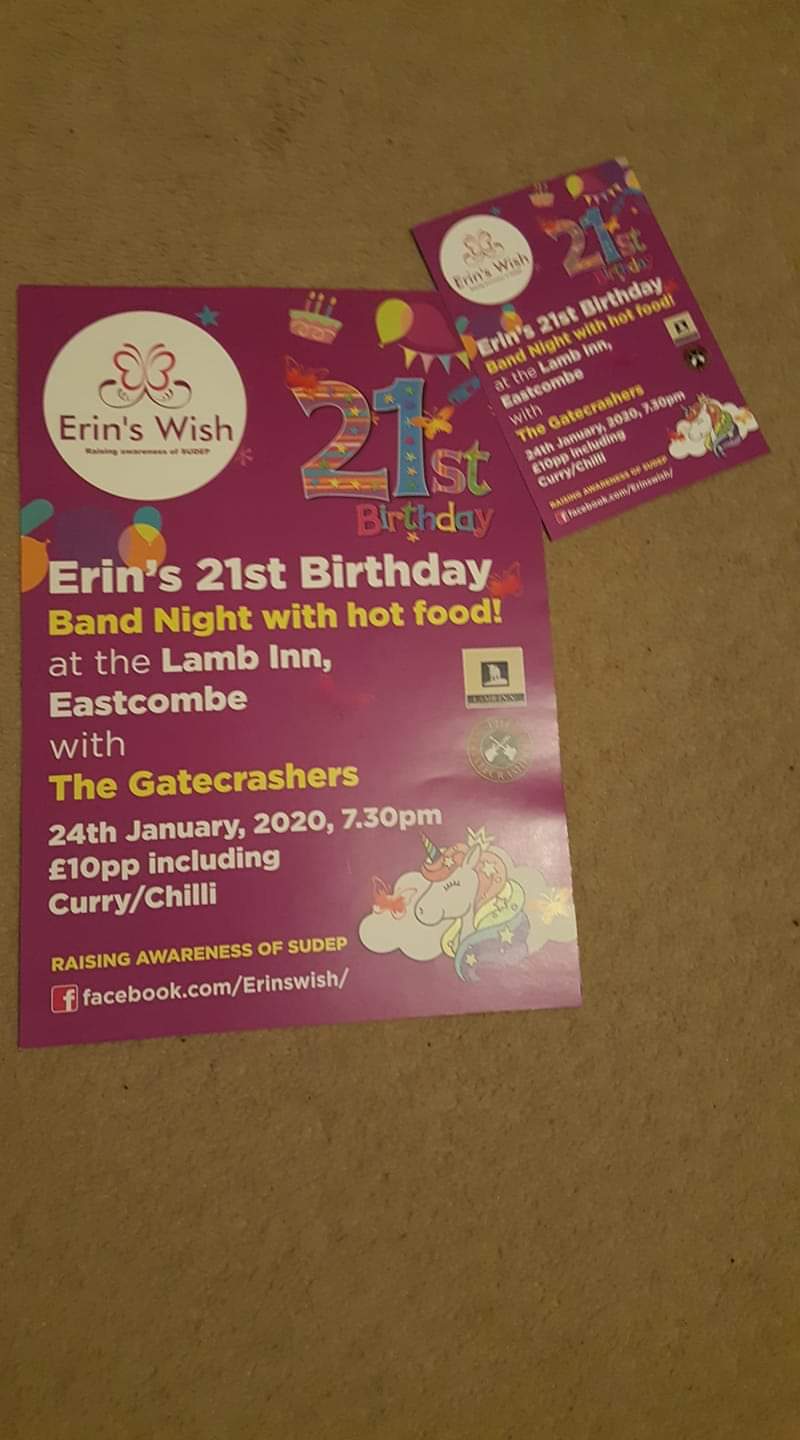
After her death Erin’s family set up "Erin’s wish"  with an aim of helping fight Epilepsy by donating all profits to SUDEP ACTION. A charity who raises awareness and provides invaluable support for those affected by SUEP. 

 Many charity events have been held in Erin’s name such as bingo nights, race nights, meals, live music events and many more. 


All events have been extremely successful raising over £7000 for SUDEP Action in just under 2 years. 


To find out more visit the links below: 


Tuesday, 31 March 2020

Cerebral Palsy Awareness Month

Cerebral palsy is a rare medical condition that affects around 17,000,000 people worldwide. 

  Symptoms normally begin to show themselves when a child is around 2-3 years old, indications your child may have this condition are if they: 


  • Are delayed in reaching early development milestones such as sitting by age 8 months walking by 18 
  • Their limbs seeming stiffer or floppier than normal
  • They have weak arms or legs
  • They make fidgety, jerky or clumsy movements
  • They move uncontrollably 
  • They walking on tiptoes
  • They have issues with swallowing, speaking, vision or learning. 
The severity of symptoms varies from person to person significantly. Some endure a life of severe disability, while others may not.  

Cerebral Palsy is a lifelong condition as a cure is yet to be found. Although treatments are available to help with mobility and speech these include. 
  • physiotherapy – Simple exercise designed to help maintain physical ability and improve movement speech therapy - to help your child communicate or assigns tasks to aid their swallowing difficulties
  • occupational therapy – Occupational therapy involves a therapist suggesting ways to make difficult tasks easier to complete. 
  • Doctors often prescribe medications to reduce muscle stiffness or other difficulties 
  • Some children benefit from various surgeries, designed to treat movement and growth problems. 

Various factors can cause you to develop cerebral Palsy such as:

  • Bleeding to a baby's brain 
  • reduced blood and oxygen supply after birth
  • Being infected by something the mother has caught during pregnancy
  • the brain temporarily not getting enough oxygen. 
In many cases, the exact cause is never identified. 


When you have a disability it is easy to sit around wishing you could do all the things your peers can. Peoples' perceptions are based on what they see. 

If you recognise a thing to be normal other your more likely to cast judgment on someone whose reality is different than yours.

I know many individuals who aren't expected to reach may of life supposed milestones, myself being one of them. 

From the moment we begin our lives to the day we die we have so many milestones forced upon us. 

Society is very good at pressuring you to believe you have to do things within a certain time limit, accomplishing things at designated ages. 

One of the most challenging things for me personally is knowing and watching everyone achieve things I don't ever see myself being able to do. It's only when others flip these perceptions on their heads that you begin to realise what is truly possible. Even if you have to work a little harder to achieve it. 


A prime example of this is comedian Lee Ridley also known as lost voice guy, who despite having no speech due to severe cerebral Palsy. Became not only the first comedian to win Britain's got talent, but also the first disabled person to win. As well as this Lee then became the U.K's first well-known comedian to use a communication aid in his performance. 

If you know me and if you're reading this you most likely do you will know just how sensitive of a person I am, especially when it comes to my health. A lot of the time I feel people are making fun or judging me when they probably aren't, I also struggle with comedy because I'm so easily offended. But Lee completely cracks me up. Not only is he a funny person but I can relate to him whereas most comedians' jokes

 either go over the top of my head. (I might laugh if others do because laughter makes me laugh but I won't get it) 
After a few years of being ill, when I was out of the sleeping constantly stage I began to look back at my past and things I'd done, watched or read and I couldn't name one disabled person. Since looking hard enough I've gained tons of new idols but looking back that's upsetting. I say it nearly every blog and will continue to do so forever but it is so important to be able to relate to people or characters, it makes you feel so much less alone. I attended one of Lee's shows last year, it was clear to see how many others felt the same as I did. Seeing someone just getting on with life-defining all odd, despite everything brings it home that anything can be achieved no matter who you are, where you come from or what challenges you face. 

Thank you for reading, I have two possible blogs coming up featuring people with cerebral palsy. Both of whom would have been in this only I feel it is now rather long and here is a good place to end. 

Wednesday, 25 March 2020

The Disabled Riding association

Not long after the Second World War, people began to realize that people with disabilities benefited from horse riding.
Early pioneers of this idea now known as the RDA association (Riding for the disabled) included the Winford Orthopaedic Hospital, located near Bristol, Chigwell's (in Essex) Pony Riding for the Disabled Trust and the British Polio Fellowship.


1952 and 1956 sow Danish rider, Lis Hartel competes and wins silver medals for dressage. Despite having no lower leg muscle function.

Lis’s success inspired a considerable movement in horse riding for the disabled which spread to the UK.
A movement had begun and In 1963 those involved began getting together to exchange ideas and knowledge.
1964 witnessed the start of a loose organization called the ‘Advisory Council on Riding for the Disabled’ (ACRD).
Then by 1966, there were already 23 known disabled riding groups around the UK and the disabled riding community was growing larger day by day.

In reach of success 1969, ACRD AGM held a presentation which was presented to the Committee to create what would be known as Riding for the Disabled Association (RDA.) Their first President was Lavinia, Duchess of Norfolk, along with this Princess Anne became Patron. Going on to gain the title of President in 1976, a position she still holds today.

Disabled sports are rarely talked about, even at the time of the Paralympics when disability sports are being showcased worldwide. Its competitors and games as a whole don't seem to be given as much credit as is given to those competing in the Olympics.
It is sad really if you think about how hard these people must train to get there. I'm lucky in the respect that I can walk short distances but even for me, I find exercising extremely difficult. I can't even begin to imagine what it's like for competitors even if they are enjoying themselves in the process.


I've said it time and time again but it is really important for people, especially young children to be able to see themselves.
About a year ago I was scrolling through the tv channels and found a channel playing disabled tennis, never really had an interest in sport, mostly because being asthmatic and joint issues (especially in my early years) meant none wanted to pick me for sports teams.
Which was annoying and partly why I hated sport. Anyway, I found this channel playing tennis (one of my favourite sports although I am still awful at it) I turned to mum saying something along the lines of "I could do that" it's not the fact I wanted to although for a good few days I was convinced I did.
What amazed me was that people in wheelchairs were competing in tennis matches,


If someone had told me this was a possibility I probably wouldn't have questioned it.
I know for a fact that until that moment, I'd never considered it, I'd never seen it. 
In saying that this is coming from a person who constantly gets excited when she notices a disabled character or presenter on T.V and even though I didn't need this as a child (although I think something like "Get well soon" would have been extremely useful.

I had a friend who at the time of the London 2012 Paralympics was determined to become & Paralympian simply because before then she had never experienced perhaps she didn't even know it was a thing. At the time I didn't really understand why she was so excited. And although this ambition was short-lived it gave her the determination and ambition to try harder in PE lessons and something worth aiming for. 


Prince Harry's Invictus Games (Another thing I loved) have taught us all that even people who have been through the toughest of times can overcome their challenges. Making bigger, better and brighter lives for themselves.
If you are a frequent reader of my blogs you will have noticed by now that I go off-topic an awful lot, but I always think it's important to put pieces of my experiences within them.
Going back to horse riding I had the pleasure of getting to interview RDA rider Tegan who I solely agree with on all of her points.


Q)Can you give some background as to what RDA is & what they do? 

  1. RDA is an international organisational made up from many around the world for disabled people to learn how to ride. This could be therapeutic, offer sensory development and overall growth in any child. RDA also offers a sports element allowing riders to compete in showjumping, dressage, cross country, countryside challenge and vaulting against other riders with a similar graded disability in the region and in the nation. It also is a communal space to not only riders but parents and careers, riders are able to bond with their horses and other riders, which without the horses might have been difficult for them to do. Different RDA’s all travel to one destination once a year to see how everyone has improved, this is a very important event to all competitors. 


Q) What inspired you to be a horse rider? 

  1. I’ve been riding for 15 years now, but I guess what inspires me is watching others succeed. Because I see that and that’s what I want for myself. With riding, you have to be on your A-game as there’s always someone who you’re up against but sometimes that rivalry is what keeps you going. As well as watching celebrities such as Oliver Townsend and Sophie Christiansen, they’re always inspiring me to progress!


Q) Do you think disabled sports should be more widely shown on tv. I feel other than the Paralympics & Invictus it is not very widely broadcast?

  1. I think para-sport isn’t given the credit it should have. People don’t always see Paralympians ’s at the same level as Olympians which is disappointing because a lot of the Paralympians are actually better than the Olympians and are so inspiring! This is common within the media, there’s a stigma around disabled athletes how people think it was all just given to them and because they’re disabled they didn’t have to work hard for what they’ve achieved. Which is the complete opposite, para-athletes work and train much harder as there’s more for them to overcome!


Q)How did you find out about RDA?

  1. My physiotherapist told my parents to contact my local RDA. She knew I was getting to an age where I didn’t like doing my physio and there aren't many sports I could do to exercise and thought this would be great physical therapy. 


Q) What have you found to be most challenging about horse riding with a disability? 

  1. Two things, one being the challenge of controlling the movement of the body. Because I have dystonia my arm moves uncontrollably and unconsciously which can become annoying when you finally get the horse working beautiful and then your body ruins it. It’s something that’s uncontrollably but mentally challenging. The other is as an RDA rider there’s a lot of health and safety put in place which means in a place where things are made to be adapted to you there’s still a lot of restrictions. The horse gives you a new sense of freedom but what you do with that freedom is limited. 


Q) How much of an impact do you feel charities like RDA have on people? 

  1. A HUGE impact. From my perspective, I don’t know where I’d be without RDA. RDA has given me so much. It’s a place where worries fade away, friends come together, memories are made and bonds are formed. There aren’t any other successful businesses out there for the disabled community as much as this one. They offer jobs to people who can’t get them, the coaches are everyone’s second mum’s, they support people with things outside of RDA. It’s such a beautiful charity like no other!


Q)What is one piece of advice you would give to someone who has an interest in horse riding? 

  1. I’d say, just go for it! It may seem scary but there’s nothing to be scared about! Everyone is lovely and welcoming and the freedom you get when on a horse is a feeling like no other, can’t go without it! And after a few years, you’ll think... I should have joined sooner!


To find out more about RDA visit: